
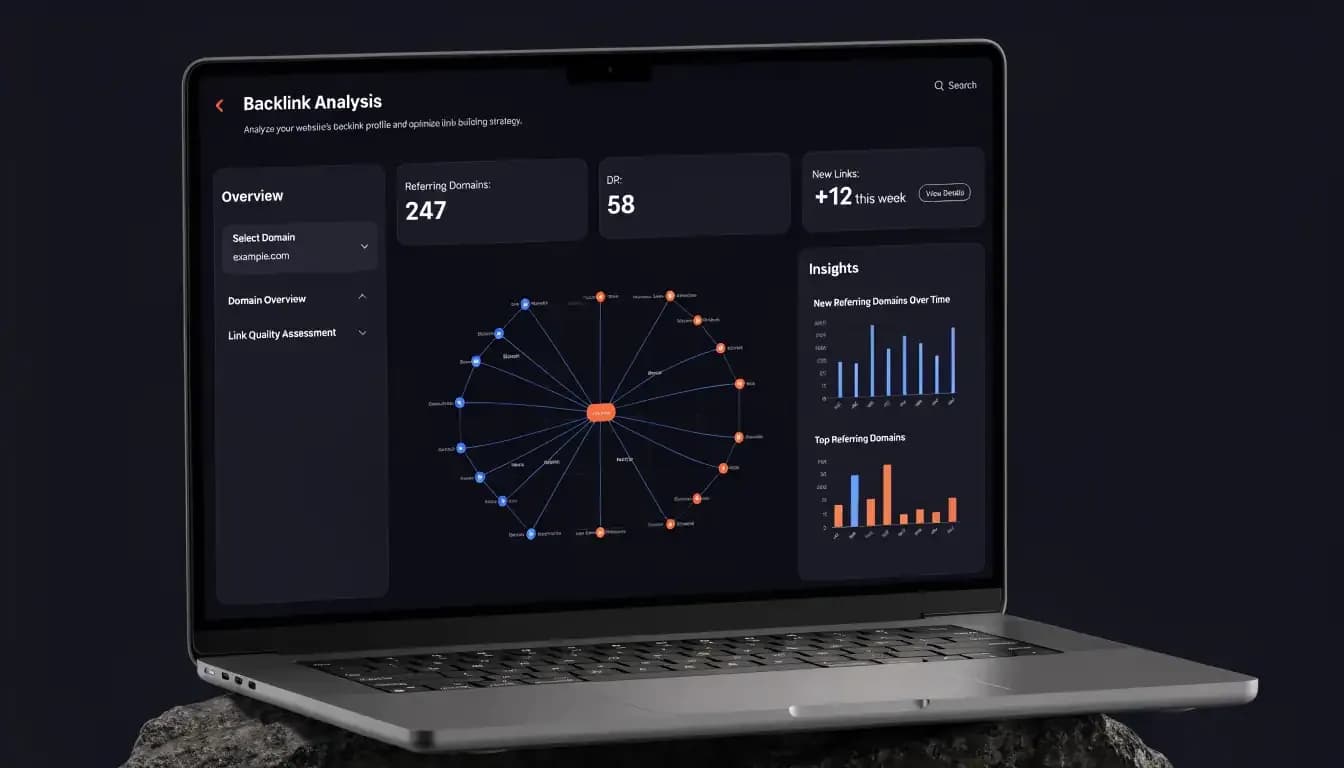
Learn how to build backlinks in 2026 with 10 proven link building strategies. Boost domain authority, beat competitors, and rank higher. Start free.
Quick Answer: The most effective ways to build backlinks in 2026 are creating genuinely link-worthy content, earning media coverage through digital PR, and strategically reaching out for guest posts or broken link replacements. Shortcuts like buying links or using private blog networks risk Google penalties — sustainable link building is about earning editorial links at scale.
Backlinks remain one of the strongest ranking signals in Google's algorithm. But what worked in 2021 — bulk directory submissions, low-quality guest posts, private blog networks — can actively hurt your site today. In 2026, link building is about earning trust, demonstrating expertise, and creating content so valuable that other websites want to reference it. This guide covers every proven strategy, what to avoid, and how tools like Allable make the research 10x faster.
Why Backlinks Still Matter in 2026
Google has publicly confirmed that links remain among its top three ranking factors — alongside content and RankBrain. Despite regular algorithm updates, the core logic hasn't changed: when an authoritative website links to yours, it passes a vote of confidence that Google uses to assess your page's credibility.
What has changed is how Google weighs those votes. The Helpful Content System, combined with E-E-A-T (Experience, Expertise, Authoritativeness, Trustworthiness) signals, means a single link from a highly relevant, well-trafficked publication now outweighs dozens of links from obscure, low-quality domains.
Key facts in 2026:
- Sites ranking in positions 1–3 on Google have an average of 3.8x more backlinks than pages in positions 4–10, according to multiple large-scale correlation studies.
- Referring domain diversity matters more than raw link count — 50 links from 50 different domains beats 50 links from the same domain.
- Topical relevance now rivals raw Domain Authority. A link from a mid-tier industry blog often outperforms one from a massive off-topic site.
- Google's AI Overviews pull from pages with strong backlink profiles, meaning off-page SEO now influences AI visibility, not just blue-link rankings.
The conclusion? Link building is not optional. It's the difference between a site that stagnates on page 3 and one that consistently earns organic traffic.
What Makes a Backlink Valuable?
Not all links are equal. Before launching a link building strategy, understand what separates a high-value backlink from a wasted effort.
Domain Authority and Rating
Domain Authority (Moz) and Domain Rating (Ahrefs) are third-party scores that estimate how powerful a website's link profile is. Higher scores generally indicate more link equity being passed. Aim for links from sites with DA/DR 40+, though a DA 25 site in your exact niche can outperform a DA 70 off-topic one.
Topical Relevance
Google evaluates whether the linking page and the linked page share semantic relevance. A gardening blog linking to your gardening e-commerce store passes far more value than a celebrity gossip site doing the same. Prioritize niche-relevant sources above all else.
Dofollow vs. Nofollow
- Dofollow links pass full PageRank (link equity) and directly boost your rankings.
- Nofollow links (and newer
ugc/sponsoredattributes) pass reduced or no direct PageRank but still generate traffic, brand awareness, and can still influence rankings indirectly.
A natural link profile in 2026 includes a healthy mix of both. Sites with 100% dofollow links look manipulated to Google.
Placement and Context
Links within the body copy of an article, surrounded by relevant text, are worth more than footer links, sidebar widgets, or sitewide navigation links. Editorial in-content links are the gold standard.
Anchor Text
Anchor text — the clickable words of a hyperlink — gives Google context about your page's topic. A natural profile includes:
- Branded anchors ("Allable", "Allable.ai") — largest proportion
- Naked URLs (https://www.allable.ai/)
- Generic anchors ("click here", "read more")
- Partial-match keywords ("AI marketing platform for SEO")
- Exact-match keywords ("how to build backlinks") — use sparingly, over-optimization triggers penalties
10 Proven Link Building Strategies for 2026
1. Create Link-Worthy Content (Link Bait)
The most scalable long-term link building strategy is simply creating content other people want to cite. This is sometimes called "link bait" — not clickbait, but genuinely useful assets that serve as reference material.
Content formats that attract the most backlinks:
- Original research and surveys — proprietary data no one else has. Other writers link to statistics.
- Comprehensive ultimate guides — like this one. Detailed, well-structured content becomes a go-to reference.
- Free tools and calculators — a free ROI calculator or SEO audit tool earns natural links constantly.
- Infographics and data visualizations — visual content gets embedded and cited.
- Industry reports and trend analyses — journalists and bloggers link to authoritative annual reports.
Action: Audit your current content. Which pieces have the strongest information density? Consider updating them with fresh 2026 data and promoting them to relevant journalists and bloggers via outreach.
2. Guest Posting (The Right Way)
Guest posting remains one of the most reliable active link building strategies in 2026 — but the tactics have evolved. Google now penalizes "link schemes" where sites publish low-quality guest posts purely to pass link juice.
The right way to guest post:
- Target publications your target audience actually reads — not just sites with high DA.
- Pitch genuinely useful articles that fit the host site's editorial standards.
- Place your link naturally within the content where it adds value to the reader.
- Write content you'd be proud to put your name on.
Finding guest post opportunities:
- Search Google:
"write for us" + [your niche] - Look at your competitors' backlink profiles — where do they guest post? (A competitor backlink analysis via Allable's competitor analysis tool surfaces these instantly.)
- Use Allable's keyword research to find high-traffic blogs covering topics you could contribute to.
Aim for 2–4 quality guest posts per month rather than mass-producing generic content.
3. Broken Link Building
Broken link building is a win-win link building strategy: you help a webmaster fix a broken link on their site while earning a backlink to your relevant content.
How it works:
- Find pages in your niche that contain broken (404) outbound links.
- Identify what the original linked content was about.
- Either create a new piece of content that replaces it, or identify an existing page on your site that fits.
- Email the webmaster, point out the broken link, and suggest your page as a replacement.
Finding broken links: Use Allable's site analysis tools or a crawler to identify broken outbound links on competitor pages, resource pages, or industry link roundups. The response rate for broken link outreach typically runs 5–15%, making it one of the more efficient cold outreach tactics in any link building strategy.
4. Digital PR and HARO/Connectively
Digital PR — earning editorial coverage from news sites, magazines, and industry publications — produces some of the highest-authority backlinks available. A single link from Forbes, TechCrunch, or an industry trade publication can be worth more than 100 links from average blogs.
Tactics:
- HARO / Connectively / Qwoted: Sign up as a source. Journalists post queries looking for expert quotes and data. Respond with genuinely useful, specific answers. A successful placement earns a branded backlink from a major media outlet.
- Data-led press releases: Publish original research (survey results, industry benchmarks) and send a press release to relevant journalists. Reporters need data; if you have it, they link to you.
- Newsjacking: When a trending story relates to your expertise, pitch a unique angle to journalists quickly. Speed matters — first responses often get the quote.
- Expert commentary: Proactively build relationships with journalists in your space. Offer yourself as a source for future stories.
Digital PR takes consistent effort but produces the highest-quality links available for an off-page SEO strategy.
5. Skyscraper Technique
Popularized by Brian Dean at Backlinko, the Skyscraper Technique involves finding content that already has lots of backlinks, creating a definitively better version, and then reaching out to everyone who linked to the original.
Step-by-step:
- Find a high-performing piece of content in your niche (use competitor backlink analysis to identify heavily linked pages).
- Create a significantly improved version — more comprehensive, better designed, more up-to-date, with original data.
- Find all websites linking to the original article.
- Reach out and let them know about your superior version.
The response rate varies (typically 5–10%), but since you're reaching out to sites already proven to link to this type of content, the quality matches are high.
6. Reclaim Unlinked Brand Mentions
One of the fastest wins in link building is turning existing unlinked brand mentions into actual backlinks. Every time someone writes about your brand, product, or content without linking back to you, it's a link opportunity waiting to be claimed.
How to find unlinked mentions:
- Set up Google Alerts for your brand name, product names, and key phrases.
- Use Allable's competitor analysis features to monitor web mentions.
- Search Google for
"your brand name" -site:yourdomain.comto surface mentions without links.
Outreach: Send a polite, brief email thanking them for the mention and requesting they add a link. Conversion rates are high (20–40%) because the relationship already exists — they already know your brand.
7. Resource Page Link Building
Resource pages are curated lists of links to useful tools, articles, and guides on a specific topic. Getting listed on a relevant resource page earns a highly relevant contextual link.
How to find resource pages:
- Google searches:
[your topic] + "useful resources",[niche] + "helpful links",[industry] + "resource page" - Check where your competitors are listed — your site may qualify for the same pages.
Pitch approach: Keep it short. Explain what your resource offers, why it fits their list, and include the URL. No lengthy sales pitches — resource page curators get dozens of requests.
Resource pages tend to be evergreen, so one well-placed link can send referral traffic and link equity for years.
8. Build Links Through Partnerships
Business partnerships are an underutilized source of highly relevant backlinks. If you integrate with other tools, sponsor events, partner with agencies, or collaborate with brands, those relationships can and should include links.
Partnership link opportunities:
- Integration or tech partner pages: If you integrate with another SaaS tool, request a listing on their partners page.
- Supplier/vendor mentions: Companies you work with often highlight clients. Ask to be featured.
- Sponsorships: Industry events, podcasts, newsletters, and online communities often list sponsors with links.
- Co-marketing: Write joint research reports or case studies — both parties link to the published content.
These links are often highly authoritative because the sites linking to you have genuine editorial credibility in your industry.
9. Testimonials and Reviews
Writing testimonials for tools, software, or services you use is an easy and underused link building tactic. Companies love displaying testimonials on their homepage or dedicated customer pages — and they almost always link to the reviewer.
How it works:
- Make a list of tools, platforms, and services you genuinely use and can honestly recommend.
- Reach out offering a testimonial.
- Write a specific, enthusiastic quote about the real results you got.
- Request they link back to your website when they display the testimonial.
Conversion rates here are extremely high — companies want good testimonials. One email can earn a contextually relevant link from an authoritative domain in your space.
10. Competitor Backlink Analysis
Knowing where your competitors get their links tells you exactly where you should be trying to get links too. This is one of the most data-driven and efficient link building strategies available.
Process:
- Run a competitor backlink analysis to see your top competitors' referring domains.
- Identify patterns: Are they frequently cited by certain publications? Listed on specific resource pages? Featured in industry round-ups?
- Prioritize the gaps: Sites that link to 2–3 of your competitors but not to you are the highest-priority outreach targets.
- Build a target list and start outreach systematically.
Allable makes this research fast — enter a competitor's URL and instantly see their top referring domains, anchor text distribution, and newly acquired links. Use this data to fuel all your other link building strategies.
Link Building Tactics to Avoid in 2026 (Google Penalties)
Google's Spam Policies explicitly target manipulative link building. These practices risk manual penalties, algorithmic demotions, or complete deindexation:
❌ Private Blog Networks (PBNs)
Buying links from a network of fake sites built purely to pass link juice. Google is very good at detecting these — if discovered, expect a manual action.
❌ Paid Links Without the Sponsored Attribute
Paying for dofollow links without disclosing them violates Google's guidelines. If you sponsor content, use rel="sponsored".
❌ Sitewide Link Schemes
Footer links, sidebar links, or template-level links placed on hundreds of pages of another site. These were popular in the early 2010s and are now heavily discounted or penalized.
❌ Low-Quality Directory Submissions
Submitting to hundreds of generic web directories for the sake of link volume. A few highly relevant, well-curated directories are fine; mass submissions are not.
❌ Comment Spam and Forum Link Drops
Leaving keyword-anchor links in blog comment sections or forums adds no editorial value and will be nofollow at best, a penalty trigger at worst.
❌ Link Exchanges at Scale
"I'll link to you if you link to me" is a reciprocal link scheme when done systematically. Occasional natural reciprocal links happen naturally; large-scale structured exchanges are a red flag.
The risk/reward calculation for these tactics is terrible in 2026. A single algorithmic hit can wipe out years of SEO progress. Stick to white-hat link building.
How to Track Your Backlinks
Building links is only half the equation — you need to monitor your link profile to understand what's working, catch toxic links early, and measure campaign ROI.
Key metrics to track:
- Total referring domains — the number of unique domains linking to you
- Domain Rating / Domain Authority — your overall link profile strength
- New vs. lost links — are you gaining more than you're losing?
- Anchor text distribution — check for over-optimization red flags
- Link velocity — sudden spikes can trigger algorithmic scrutiny
Tools for backlink tracking:
- Google Search Console — Go to Links → Top linking sites to see which domains link to you. It's free, directly from Google, and shows data Google actually uses.
- Allable's competitor analysis — Monitor your own backlink growth alongside competitors. See new links in real time, identify lost links, and compare referring domain counts side by side.
- Backlink audit tools — Regularly audit your profile for toxic or spammy links. If you find a pattern of low-quality links pointing to your site (from negative SEO or old campaigns), disavow them via Google Search Console.
Set a monthly backlink review cadence: check new links gained, links lost, and your overall referring domain trajectory. Tie this data back to your keyword ranking changes to understand the true impact of your link building efforts.
How Many Backlinks Do You Need to Rank?
There's no universal answer — it depends entirely on your niche, target keyword, and competition level. But here are realistic benchmarks based on SERP analysis data:
Keyword Difficulty | Typical Referring Domains (Page 1) | DR of Top Pages |
|---|---|---|
Low (0–30 KD) | 5–30 referring domains | DR 20–45 |
Medium (31–60 KD) | 30–150 referring domains | DR 40–65 |
High (61–80 KD) | 150–500 referring domains | DR 55–75 |
Very High (81–100 KD) | 500+ referring domains | DR 65–90 |
What this means in practice:
- For low-competition keywords in niche industries, 20–30 high-quality backlinks to a well-optimized page can be enough to reach page 1.
- For competitive terms like "link building tools" or "SEO software," you're looking at hundreds of referring domains from authoritative sites.
- Consistency beats volume. Earning 10–15 quality links per month over 12 months outperforms a one-time sprint of 100 low-quality links.
Always benchmark against the pages actually ranking for your target keyword — not generic averages. Use the SERP data and Allable's keyword analysis to get the exact competitive threshold for your target terms.
How Allable Speeds Up Your Link Building Research
Link building is time-intensive — most of the work is research, prospecting, and writing. Allable's AI marketing platform compresses hours of manual work into minutes.
Here's how Allable helps at each stage:
🔍 Competitor Backlink Analysis
Enter any competitor URL into Allable's Analyze Competitors tool and instantly see their referring domains, top linked pages, anchor text patterns, and newly acquired links. This transforms your link prospecting from guesswork into a data-driven prioritized list.
📊 Keyword Research for Link Targets
Use Allable's keyword research tool to identify which of your pages have the highest ranking potential and deserve the most link building effort. Not every page needs backlinks — focus your outreach budget on pages that can realistically rank and drive revenue.
✍️ Content Creation at Scale
Allable's AI writing capabilities help you produce guest posts, outreach templates, link bait articles, and original research faster than any manual process. Higher content output = more link building opportunities.
📈 Performance Tracking
Monitor keyword ranking changes alongside your link acquisition data. When a new referring domain drives a ranking jump, Allable surfaces that connection so you can double down on what's working.
Try Allable free → https://studio.allable.ai
Frequently Asked Questions
How long does link building take to show results?
Most link building campaigns show measurable ranking improvements within 3–6 months of consistent effort. Links from very high-authority domains can impact rankings within 4–8 weeks. The delay occurs because Google needs to recrawl the linking page, process the link, and recalculate rankings for affected pages. Patience and consistency are essential — link building is a long-term investment.
Is it safe to buy backlinks in 2026?
No. Buying links that pass PageRank without the rel="sponsored" attribute violates Google's Spam Policies. Sites caught in paid link schemes risk losing rankings, receiving manual actions, or complete deindexation. The only safe "paid" links are sponsored posts clearly marked as such. The ROI on white-hat link building far exceeds the risk-adjusted return of paid links.
What is the best free backlink checker?
Google Search Console is the most accurate free backlink tool — it shows you exactly which links Google has discovered and credited to your site. For competitive research (checking competitors' backlinks), Ahrefs Webmaster Tools offers free limited access for your own site. Allable's platform provides integrated competitor backlink analysis as part of its SEO toolkit.
How do I get backlinks for a brand-new website?
Start with tactics that don't require authority you haven't built yet:
- Unlinked mentions — if your brand or founders are mentioned anywhere, claim those links.
- Partnerships and supplier pages — easy wins from existing business relationships.
- Guest posts on niche blogs — your content quality matters more than your DA when you're starting out.
- HARO/Connectively — expert quotes can land on high-DA publications regardless of your site's age.
- Create genuinely useful resources — a free tool or original dataset earns passive links even for new sites.
Avoid buying links or seeking shortcuts — the penalty risk is amplified for newer domains.
What's the difference between dofollow and nofollow backlinks?
A dofollow link passes PageRank (link equity) from the linking site to yours, directly contributing to your Google rankings. A nofollow link (marked with rel="nofollow") historically passed no equity, though Google now treats it as a "hint" and may pass some value. A natural, healthy backlink profile includes both types. A portfolio of 100% dofollow links looks manipulated and may raise algorithmic red flags.
How many backlinks per day is safe?
There's no hard limit, but link velocity (the rate at which you acquire links) should look natural. A brand-new site gaining 500 links overnight is a manipulation signal. Organic link growth is gradual and consistent — typically correlating with content publication and promotion activity. Most white-hat campaigns aim for 10–50 new referring domains per month, scaling up as domain authority increases.
Does off-page SEO matter more than on-page SEO?
Both are essential. On-page SEO (content quality, keyword optimization, technical health) determines whether your page deserves to rank. Off-page SEO — primarily backlinks — determines whether Google trusts it enough to rank. Neglecting either creates a ceiling on your performance. The most effective SEO strategy in 2026 combines excellent content with a consistent link building strategy.
Ready to accelerate your link building research? Allable gives you competitor backlink analysis, keyword research, and AI-powered content creation in one platform.
Start building better backlinks with Allable → https://studio.allable.ai