Your research is booked and the launch date is set. The one line your plan probably does not contain is the result that would stop it, or the name of the person who has to sign that condition. Do you know their name without checking?
In the week the deck arrives, one number gets read out, someone calls it directionally encouraging, and the room moves on. Nobody in that room is lying. They are reading the same number against different assumptions, and none of those assumptions was written down before the fieldwork started. The research was fine. The decision it was meant to produce never had a shape, and the launch goes ahead on the date already printed in the plan. So what would your team have had to agree to, in advance, for that room to behave differently?
Market research for product launch decisions is usually bought to reduce risk. About half of the new products that clear a development gate never reach a launch, so the risk being reduced is larger than it looks on a launch plan. The figure comes from the Product Development and Management Association's global survey, reported through Research-Technology Management in 2025: 49% of new product projects analyzed and approved for development never made the final launch stage. The study sitting in front of your gate has one job that matters, and it is producing an answer that could change the date.
Write the Kill Criteria First
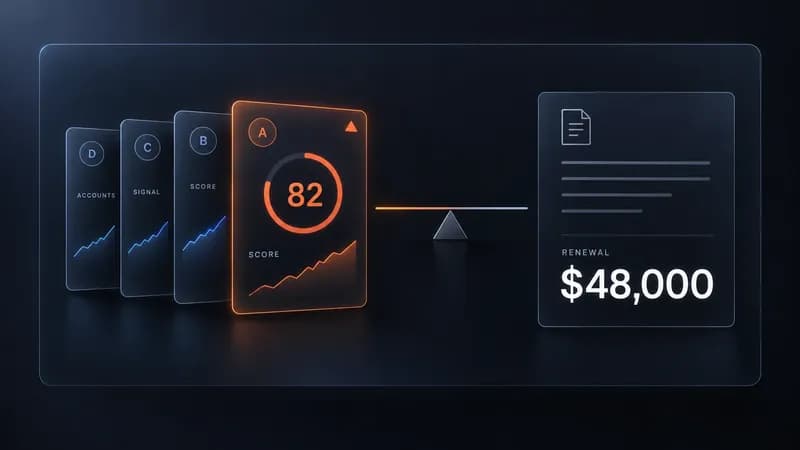
Write the criteria before you book anything. The document is what stops a team from reading a bad result as an encouraging one.
A usable criterion has four parts: a threshold, a source, an owner and a date. Mine look like this.
- The price floor. If the price your target segment accepts sits below the unit cost you need at the quantity you can actually sell, stop. Not revisit the pricing model later. Stop.
- The workaround. If buyers call what they do today adequate, and cannot put a cost on it in hours or in a contract they already pay for, stop.
- The switch. If moving costs a customer more than a year of your price (data to migrate, a contract to break, a team to retrain), stop, or narrow the segment until it does not.
All three are decidable from a number and a sentence. A criterion that needs a meeting to apply will be applied by the meeting.
Order matters more than wording. Written after the result, a kill criterion is a justification with a number attached, and everyone in the room can feel that while it happens.
The negative case is not hypothetical. CB Insights' 2021 analysis of 111 failed startups put running out of cash or failing to raise first at 38%, and no market need second at 35%. The cash ran out at the end. The missing demand was there from the first month.
Research That Changes the Build vs Research That Changes the Message
A launch team has one research budget and two different questions. The budget goes to the easier one.
Sort the finding before you spend on it. One test does most of the work: if you act on this, does a customer receive something different, or do they hear something different about what they already receive?
Finding | Class | What has to change | Who has to agree |
|---|---|---|---|
Buyers cannot name the job the product is for | Build | The job, or the segment you sell it to | Whoever owns the roadmap |
The price is accepted, but not for the bundle you chose | Build | The entry tier and what sits inside it | Finance and sales, with existing customers affected |
Buyers describe the outcome in different words than yours | Message | The value proposition, the page, the sales deck | Whoever owns positioning |
Buyers see no difference between you and two named competitors | Message first | Positioning, retested against the same buyers | Whoever owns positioning |
The last row is where teams lose money. Indifference looks like a message problem, because a message is the one thing marketing already controls. It stops being a message problem when the same indifference survives two rounds of rewritten positioning. Then you are not being misunderstood. You are being compared.

When you cannot place a finding, run the message fix first and write down what you expect to happen. If it returns after the message is fixed, you bought a build finding for the price of a page.
Build questions usually need people who are not your customers yet, so respondent sourcing becomes the constraint. That is a tooling problem before it is a research problem, and market research tools is where that search starts.
What You Can Test Before a Build Exists
Three questions can be answered before a line of the product exists. All three are usually answered badly.
Willingness to pay. The Van Westendorp price sensitivity meter, published in 1976, measures perceived price acceptability. It does not measure willingness to pay, and treating the two as the same thing is how a launch ends up with a price nobody argued about and nobody bought. Practitioner guidance is to pair the survey with one behavioral check: a smoke test, a paid beta or a live price test. A 2010 study found hypothetical willingness to pay roughly three times higher than a choice-based design with simulated payment. It is an old study sourced close to vendors, so read it as a mechanism rather than a current statistic.
Workaround behavior. What people do today, what it costs them, and whether they call it a problem. This is the most reliable of the three, because the workaround already exists in the world. You are not asking anyone to imagine anything. The interview method that reaches it without leading the answer is voice of customer research.
Switching cost. What has to move: data, a contract, a trained team, a habit. Ask what the last switch took, in weeks and in people. If the answer runs longer than your runway to first revenue, the segment is wrong.
All three leave a trace outside the interview: a deposit, a workaround somebody already pays for, a migration they already survived. That trace separates a finding from a preference.
What You Cannot Test Until It Ships
Some things are only knowable after the product is in someone's hands. You cannot test retention before there are months to retain. You cannot test activation inside a real account, support load, unit economics at scale, or whether a rep who did not build the product can explain it correctly. Those are properties of a shipped thing.
The honest way to handle them is to name them, date them and set a threshold in the same document as the kill criteria: we do not know this, we will know it by this date, from this source, and below this number we do this.
Three open questions, each with a date, is a stronger plan than a promise to validate everything. What happens once the announcement is out is the launch's own problem, covered in product launch strategy.
The One Number That Turns an Opinion Into a Finding
A finding is a result you would act on. That definition sets the one number your plan needs: the sample floor, the minimum response count below which the answer stops counting as a finding. How many that is depends on what you intend to do with it.
Two decisions, two floors. For a directional read that changes a concept, a bundle or a headline, 2026 practitioner guidance puts a qualitative read at 40 to 60 respondents per concept. For a number you would put in front of a board, or use to set a price, the same guidance puts a statistically usable read at 150 to 200 per concept at 95% confidence. Treat both as practitioner guidance, not as a peer-reviewed standard. The gap between them is the part worth trusting.
Then multiply. Report three segments separately and you need the floor three times.
The floor is a stop condition, so write it next to the kill criteria. A result below the floor cannot trigger a kill and cannot block one. If you cannot afford the floor, cut the number of concepts or the number of segments, never the floor itself, because a study under the floor is worse than no study. It produces something that looks like evidence.
The method choice behind each of those numbers is market research techniques.
Reading the Result Without Rationalizing It
One signer, named before the fieldwork, with the authority to cancel. Not a committee, and not the person who commissioned the study if that person cannot end the project.
Then one record, five fields: the criterion as written, the result, the decision, the date and the signature. It has to survive the launch, because the credibility of the next study depends on whether this one was allowed to be wrong.
Four things to watch in the meeting, each meaning the criteria are being rewritten after the fact. The segment moves once the result is in. A criterion appears that was not on the signed page. The study is re-run with a friendlier sample. Someone cites qualitative evidence that says something different, with no document behind it.
When the answer is stop, the record is what makes the kill legible to people who were not in the room. Write what the criterion was, what the number was, what the decision was, and what the result bought: a launch budget that was not spent, a segment that was not entered, a pivot that happened in month four instead of month fourteen. A kill that reads as a decision is repeatable. One that reads as a failure gets rewritten by the next team.
The habit of writing the decision down is covered in AI market research, and how a finding enters the plan is data-driven marketing strategy. What neither does is the part above: the record of a no.

A Four-Week Pre-Launch Research Sequence
No researcher, four weeks, one decision. This is the sequence I would run.
Week | What you run | What exists on Friday |
|---|---|---|
1 | Kill criteria, the sample floor, the three open questions | One page, signed by the person who can cancel |
2 | What people do today: desk reading plus calls with customers, lost deals and the team that sells | A workaround list with a cost against each item |
3 | The strangers: the price check and the concept read, at the floor | A number next to each criterion |
4 | One meeting. Read the numbers, decide, write the record | A decision, a date, and a reason the next study can cite |
Week two carries most of the value, and it is the week teams skip because it feels like something they already know. The workaround a buyer describes, with a cost attached, is the most useful input to a build decision, and it comes from people you can call on Monday.
Week three is the only part that needs a budget for strangers. If the calendar is tight, protect week three and shorten week one by a day. Do not cut week four, because a decision that is read but not recorded leaves the next launch exactly where this one started.
The sequence slots into the wider launch order that product marketing strategy sets out as responsibilities rather than a list.
Conclusion
The version of this that fails is easy to recognize. Research gets commissioned, the deck arrives, everyone agrees the findings are interesting, and the launch happens on the date it was always going to happen. The version that works is smaller. One signed page before the fieldwork, one number against each criterion, one record after the decision, whether that decision was go or stop. Market research for product launch decisions only pays for itself when the answer is allowed to be no, and four weeks is enough time to find out.
Frequently Asked Questions
Should research run before or after the product spec is locked?
Before, at least for the price, workaround and switch questions. Once the spec is locked, those three can still change the message and the segment, but they cannot change what gets built.
What is the difference between a concept test and a smoke test?
A concept test shows people a described product and asks for a reaction. A smoke test puts a real price and a real commitment in front of them, usually a deposit or a card, and measures whether they act.
What if the launch date is fixed and cannot move?
Then the research narrows to the two decisions the date does not control: the segment and the message. Write the kill criteria anyway, because a fixed date makes a pre-agreed stop condition more valuable, not less.
Does pre-launch research replace a beta?
No. A beta answers whether the product works and how it behaves under real use. Pre-launch research answers whether anyone wants the outcome it produces and what they will pay. They cover different questions.

Make the Stop Conditions, the Result and the Decision One Record
Set the kill criteria in the same workspace where the findings land, read the number against the threshold, and keep the call on the page the next launch can cite.