Conversion Rate Optimization Services: What a Month Actually Buys
 Written by Martin H.
A 90-day lift guarantee is a definition of lift, and the party being paid writes it. Would you still call it a guarantee if the remedy is more work?
A 90-day lift guarantee is a definition of lift, and the party being paid writes that definition. Would you still call it a guarantee if the remedy is more work?
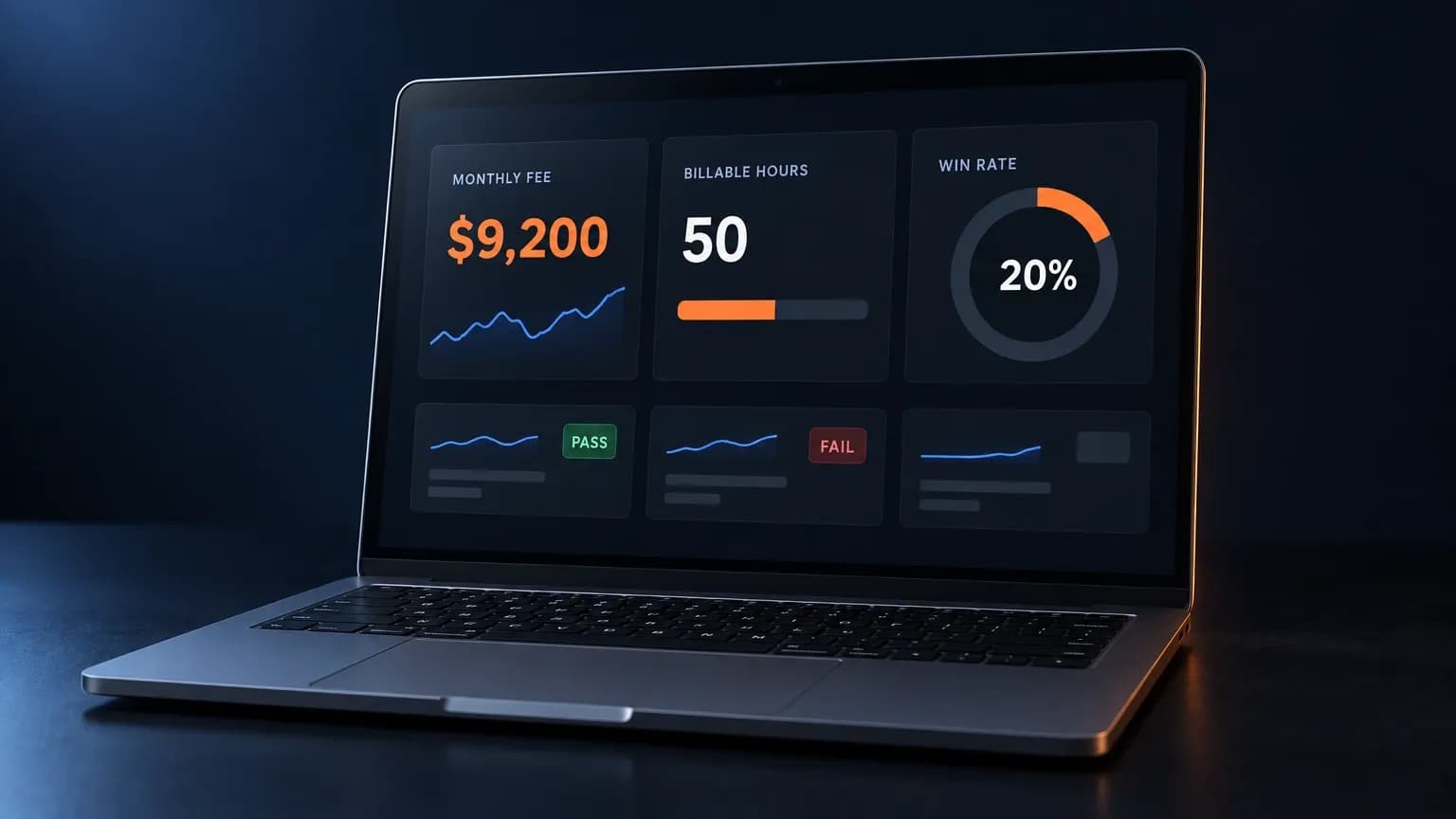
Twenty percent. That is the average win rate cited from Optimizely's program data, and it turns any quoted test count into arithmetic you can do at your desk: two tests a month is roughly one winner every three months. Most buyers meet that sum in month four, when traffic is up, conversion is flat, and eleven hypotheses are still open. So what you buy matters less than the unit you buy conversion rate optimization services in. Hours, tests, or a block of somebody's calendar.
What a Conversion Rate Optimization Engagement Actually Includes
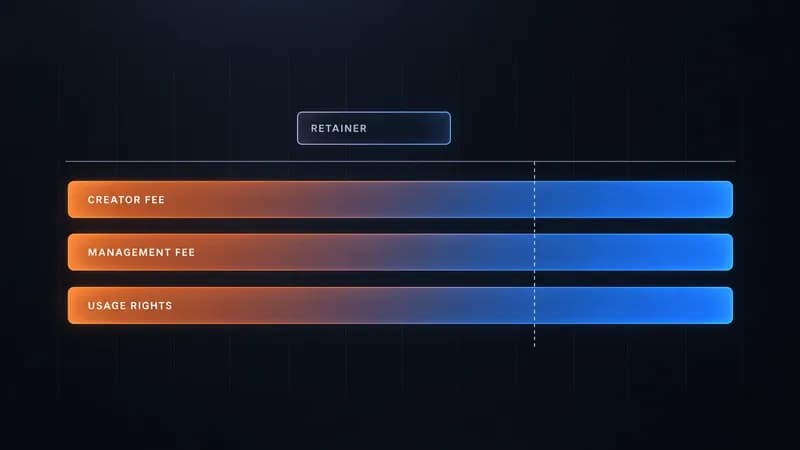
Four things sit inside almost every proposal, and three arrive as a single price.
A diagnosis. ConversionTeam sells it separately, as Hitlist at $3,500 to $10,000: a 60 to 90 page roadmap, analytics audit with fixes, heatmaps and polls, so you can price the diagnosis before committing to a retainer built on it.
A hypothesis backlog. You are not buying tests. You are buying the queue they come out of, and the queue is the part nobody lets you inspect before signature.
Implementation. Someone has to build the variant, get it through your codebase, check it on mobile and ship it. Invesp publishes what most agencies keep internal: an average A/B test takes 10 to 30 development hours, a complex test such as checkout 40 to 80.
The platform. Your testing licence is normally a separate line and can outlast the agency, so the test history should stay yours. The CRO tooling comparison covers which platform to run.
WebFX publishes the fee and the hours together: $1,800, $3,600 and $9,200 a month for 10, 20 and 50 CRO and UX hours, tests run through Omniconvert, plus heatmaps and user testing. Once you have hours, every quote becomes comparable.
The Price Band, and Why $800 to $10,000 Is One Company's Range
The $800 to $10,000 per month band is WebFX's own headline range, restated three times on one page, describing agency CRO with software and professional services included. It is not a market measurement. On that same page WebFX's own plans run from $1,800 to $9,200, so the band's floor sits below that provider's cheapest plan and its ceiling above its most expensive one. It was assembled as a marketing envelope.
Provider | Published figure | What it covers |
|---|---|---|
WebFX | $1,800, $3,600, $9,200 per month | 10, 20, 50 CRO and UX hours monthly, tests, heatmaps, user testing |
WebFX, same page | $800 to $10,000 per month | Its own headline range for agency CRO, software and services |
Spiralyze | $25,000 per month, flat, month to month | Prediction engine, design, copy and development, no commitment |
Invesp | Growth Program from $10,000 per month, flat fee | Platform plus a pod, first month free, aimed at $6M+ revenue |
ConversionTeam | Audit $3,500 to $10,000 project, Iterate from $3,500 per month | Prioritized roadmap plus an ongoing testing pod |
Personizely | $1,500 to $31,000 per month for full service | Vendor ranges, no decomposed deliverables |
Conversion Sciences | No published price | Fit threshold: 300 conversions or $100,000 revenue a month |
Every row was read on the provider's own page on 2026-11-10. The spread is roughly 30 times, and it is what sits inside the box, not quality. Only one row lets you divide the fee by a published input.

WebFX charges $1,800 for 10 hours, $3,600 for 20 and $9,200 for 50. Divide each fee by its own hours and you get $180.00, $180.00 and $184.00 an hour. That is my calculation on their two published numbers, not a stated rate. $9,000 a month is about 50 hours, $4,000 about 22.
Run the same rate against Invesp's published build time and you get a labour floor per test. 10 to 30 hours at roughly $180 an hour is $1,800 to $5,400 per average test; a 40 to 80 hour complex test is $7,200 to $14,400. Both inputs are named and the multiplication is mine. It excludes research, strategy and the licence, so treat it as a floor. It also explains why a $3,500 a month programme cannot run eight tests.
Now the uncomfortable part. There is no public distribution of what US buyers actually pay, and no census or audited survey that this research could reach. Personizely quotes the same $800 to $10,000 for a standalone CRO agency that WebFX uses as its own headline, so the figure propagated rather than being measured twice.
"No Lift, No Fee," Read Clause by Clause
The promise comes in three shapes here, and only one names a judge.
Provider | Promise | Metric | Window | Remedy | Judge |
|---|---|---|---|---|---|
ConversionTeam | 30% conversion improvement, 20% on Lite | Conversion rate from winning tests, in your analytics | First 90 days of active testing | Keep working free for up to 3 more months | The client |
Conversion Sciences | "Success in 180 days" | Not defined | 180 days | Agency keeps testing until satisfied | The agency |
Spiralyze | "30% in your first 90 days" plus a performance model | Not published | 90 days | Not stated | Client, undefined |
Invesp | "No lift, no fee" | Not published | Not published | Fee scales with results, scale unpublished | Not published |
ConversionTeam is the only provider stating all four things a guarantee needs: metric, window, remedy, and who decides. Everyone else is silent on at least two. That silence is the product: when the seller controls the metric, the baseline and the window, the guarantee describes a negotiation.

The four questions. What counts as lift: conversion rate, revenue per visitor, transactions, qualified leads or margin. A test can raise conversion rate while lowering average order value, and no guarantee I found addresses that trade. Against which baseline: the pre-engagement average, the same period last year, or a holdout, when seasonal traffic moves the number with nobody testing anything. Over which window: 90 days of calendar time and 90 days of active testing are different windows. Excluding what: promotions, launches, pricing changes and traffic-mix shifts.
Time remedy or money remedy.
Remedy type | What happens on a miss | Who carries the loss |
|---|---|---|
Time remedy | The agency keeps working, usually a few more months | You: the fee is spent and the quarter is gone |
Money remedy | Refund, credit, or no invoice | The agency |
No remedy | Model is stated but not guaranteed | You, entirely |
Every guarantee I could find is a time remedy. No provider on this SERP publishes a money-back remedy on a monthly retainer. The nearest thing is a revenue share of 10% to 30% of incremental revenue or profit, published by Conversion Rate Store as a rate example, and no agency publishes an actual performance contract with that structure.
The limit of this section. No executed CRO engagement agreement, statement of work or master services agreement is public anywhere this research could reach. This reads published promises, not contracts. Ask for the schedule that defines lift, and read the definition rather than the headline.
Why the definition decides is published by a CRO agency itself. Invesp's blog carries an account of the last time the company ran a performance model. A second experiment produced a 35% uplift at 99% confidence. The client was unconvinced. The test was re-run twice more, then a third time on different testing software, and it held. The fee at stake was $45,000. The client disappeared for a couple of weeks, then sent a lengthy letter from the CEO attempting to debunk A/B testing and all statistical analysis. The agency walked away and resolved never to take a performance-based project again.
The same domain now leads its home page with "No lift, no fee," one click from that post. 35% measured three times across two software platforms still did not get paid. The case proves that the definition of lift, not its size, decides who pays. It does not prove that any current contract behaves that way, and it is one documented instance, not a market. When you claim lift later, the attribution question sits under the same definition, and the measurement model behind the number is what you are really buying.
In-House, Consultant or Agency
The honest version has a real case for in-house, so here it is first.
In-house costs $10,000 to $25,000+ a month by Personizely's range, a loaded figure bundling salary, tools and the tests you never run because hiring takes a quarter. But in-house owns implementation, and that is the whole advantage. Nobody has to be briefed on your codebase, nobody bills you for discovery. The failure mode is statistical discipline: one person testing alone drifts toward small samples.
A consultant fits when the gap is judgment rather than capacity. You get the backlog and the argument about sample size, you keep implementation, and you pay for hours instead of a pod.
An agency carries diagnosis, build, analysis and reporting in one throat to choke, and is also the one most likely to sell you a template. Of twelve Shopify CRO agencies reviewed by AINFLUENCER on their own sites on 2026-11-09, not one could promise a lift, and not one gave a timeline the reviewer could confirm. Cadences ran 2 to 8 tests a month, and one agency said that below 3,000 orders a month tests take too long.
The gate worth applying to all three is a fit threshold, and only one provider publishes theirs. Conversion Sciences works with sites at 300 conversions a month or $100,000 a month revenue. Below that line a retainer buys attention, not a test programme. If instrumentation is the gap, the analytics stack comes first.
Test Velocity: What Published Defaults Say, and What Arithmetic Says
There is no documented benchmark for tests per month. What exists is a set of vendor planning defaults that disagree by up to eight times.
Source | Who it describes | Tests per month |
|---|---|---|
Personizely, low tier | $2,000 to $5,000 programmes | 1 to 2 |
Personizely, top tier | $10,000 to $30,000+ programmes | 6 to 12 |
PageDuel, established | Established programmes | 3 to 5 |
PageDuel, elite | Top 5% of programmes | 15 to 20+ |
Invesp | Any programme | 2 to 12 |
AINFLUENCER, twelve agencies | Shopify CRO clients | 2 to 8 |
The same $6,000 to $15,000 tier is quoted at 3 to 6 tests by one guide and 6 to 12 by another's top tier, while Invesp's ceiling of 12 applies to anybody. These are planning defaults written by people selling the plan.
What holds is arithmetic you can run on your own numbers. A published average win rate of 20% means five tests per winner: two tests a month is one winner per quarter, six is one per month.
The other half is supply. A test needs a minimum sample, fixed before launch by your baseline rate, the effect you want to detect, your significance and your power. Published guidance: a page converting at 2% to 5% typically needs 1,000 to 2,000 conversions per variant to detect a 10% to 20% relative lift at 95% confidence, and halving the detectable effect roughly quadruples the sample. Your ceiling is monthly conversions divided by the conversions one test needs.
If that comes out at two, two is what you buy. Paying for six buys tests that get stopped early and reported as directional. There is no single correct count per month. There is your traffic, and a vendor either asking for it or quoting a template.
What Should Be Visible in Month Two
Two months in, you should be able to read six things without asking a question.
A hypothesis backlog with named items, ranked by estimated impact, and more entries than you will run this year. At least one test live, against the fastest first-test claim in this field of 15 days. A declared sample size and runtime for every live test, written before launch rather than after. A baseline captured before the programme started, in the metric the guarantee names. An implementation log: what shipped, who built it, what else changed that week. And a first decision, ship or kill, with the number attached.
What is not a month-two deliverable: "we are still learning," a deck of heatmaps with no ranking, or a list of tests to approve next quarter.
Reporting is where these programmes lose the argument, not the testing. If the number goes to a client, its shape decides whether the lift survives scrutiny, and that is a reporting discipline more than a dashboard. Running that side inside Allable is where a stack like ours earns its keep, at EUR 99, EUR 199 or EUR 399 a month after a 7-day trial that requires a card upfront.
The Number You Compute Before You Sign
Take your monthly sessions, divide by the conversions one test needs, and you have the tests your traffic supports. Multiply by 20% and you have winners per quarter. Multiply by the value of one winner and you have the ceiling on what a programme can be worth.
Round numbers. A site at 60,000 sessions a month converting at 2.5% produces 1,500 conversions. If a test needs 1,500 conversions per variant, that is one variant set a month, so call it one test. At a 20% win rate that is 0.6 winners a quarter. If a winner is worth $12,000 a year, the programme returns $7,200 a quarter, or $2,400 a month. A $9,000 retainer at that traffic level is the wrong product, bought at the wrong unit.
The guarantee tells you what happens if the number does not move. The hours tell you what you are paying for. The arithmetic tells you whether the number could have moved at all.
Frequently Asked Questions
What do conversion rate optimization services cost per month?
Published prices run from $1,800 a month for a 10 hour plan at WebFX to $25,000 flat at Spiralyze, with dedicated agencies mostly between $5,000 and $15,000. Divide any quote by its hours: WebFX's numbers work out to roughly $180 an hour, from $1,800 for 10 hours and $9,200 for 50. No public dataset of what buyers actually pay was found by this research, so treat every range, including this one, as a vendor figure.
What does "no lift, no fee" mean in a contract?
Nothing specific until it defines four things: the metric, the baseline, the window and the exclusions. Published promises here are silent on at least two, except ConversionTeam, which names all four. Every guarantee found in this field is a time remedy: the agency keeps working. None publishes a money-back remedy, and no executed agreement is public.
How many A/B tests should an agency run per month?
There is no documented benchmark, and published defaults disagree by up to eight times, from 1 to 2 tests at low budget tiers to 15 to 20 for claimed elite programmes. Work from two published inputs instead. A 20% win rate means five tests per winner, so two tests a month is roughly one winner a quarter. And a page converting at 2% to 5% needs roughly 1,000 to 2,000 conversions per variant to detect a 10% to 20% relative lift.
Is it cheaper to hire in-house or use an agency?
In-house is quoted at $10,000 to $25,000+ a month once salary, tools and hiring time are bundled, which sits above many retainers. It is still correct when implementation ownership is the bottleneck. An agency costs less per hour of senior attention and carries diagnosis, build, analysis and reporting together. Below roughly 300 conversions a month, neither has enough sample.

Run the Test Arithmetic Before You Sign
Take your monthly sessions, divide by the conversions one test needs, and you have the number of tests your traffic can actually support. Run that arithmetic on your own site inside Allable before you sign a retainer.