On-Page & Authority · Definition
What Is Internal Linking?
Internal linking is the practice of linking between pages on your own site. It is the one ranking lever you fully control — it routes authority, tells search…
Internal linking is the practice of linking between pages on your own site. It is the one ranking lever you fully control — it routes authority, tells search engines how your pages relate, and moves readers deeper into the funnel.
External links decide how much authority your site has; internal links decide where it goes. Every link you place passes some of a page's earned equity to another page, and the pages you link to most — from navigation, hubs, and body copy — are the ones search engines will treat as most important. On most sites this distribution has never been designed; it is whatever the CMS and the writers happened to do.
Internal links also do semantic work. The anchor text you use is a strong, unambiguous description of the destination, and unlike external anchors you write every one of them. A consistent phrase pointing at the same page from twenty relevant articles is a clear statement about what that page is for.
Two failure modes dominate. Orphan pages have no internal links at all, so they are discovered late and treated as peripheral no matter how good they are. And the newest content — usually the best content — sits at the bottom of the archive with links pointing out but almost none pointing in, while the site's authority stays trapped in three-year-old posts.
The practical play is to link with the same discipline you use for keywords: descriptive anchors instead of "click here", links placed where they genuinely help the reader, a hub page for each topic cluster with its supporting pages linked both ways, and a periodic sweep to find orphans and to route links from your strongest pages toward the ones that need to rank. Keep the anchor phrase varied enough to read naturally and specific enough to mean something.
Examples
- A glossary page for “keyword difficulty” linked from every article that mentions the phrase — dozens of relevant, descriptive anchors pointing at one definitive page.
- A three-year-old guide with 40 backlinks passing authority to a new product page through two in-content links, instead of hoarding it.
- An audit finding 52 published posts with zero inbound internal links — real content that search engines treat as an afterthought.
Common questions
How many internal links should a page have?
Enough to help the reader and no more. On a long article three to eight in-content links is normal; what matters is relevance and placement, not hitting a count. Stuffed links dilute each other and read badly.
What anchor text should I use for internal links?
The phrase a reader would use to describe the destination — usually the target page's main topic. Vary the wording naturally, and avoid generic anchors like "read more" that describe nothing.
Are internal links as valuable as backlinks?
They do a different job. Backlinks bring authority into the site; internal links decide which of your pages receive it. You control internal links completely, which makes them the cheapest ranking improvement most sites have available.
Allable builds your internal link graph for you
Allable's On-Page SEO Optimizer reads your whole corpus, finds the phrases already sitting in your content, and turns them into relevant internal links — with the anchor and target chosen for you, at site scale.
Also known as
Do it automatically
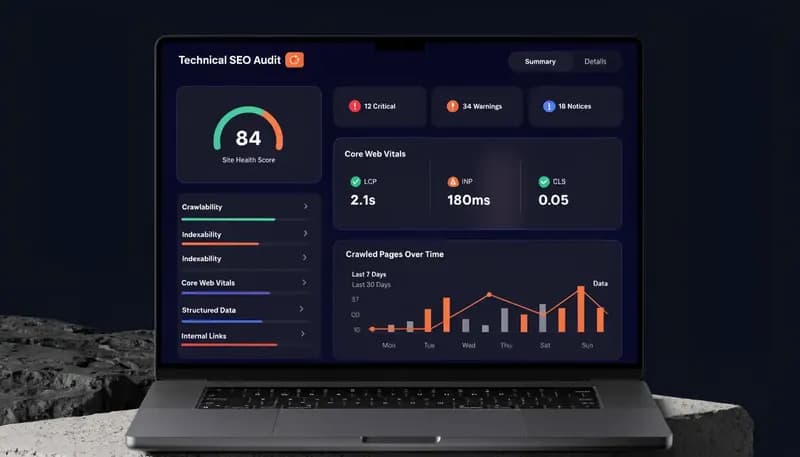
Technical SEO Audit Tool
Put Internal Linking to work — see how Allable handles it for you.
Related terms
Your competitors are already using AllAble. Are you?
The marketers pulling ahead aren't working harder. They're just working with one tool that does everything — that tool is AllAble. Try it yourself!