FlowHunt Review 2026: Is This AI Agent Builder Worth It for Marketers?
 Written by Team AllAble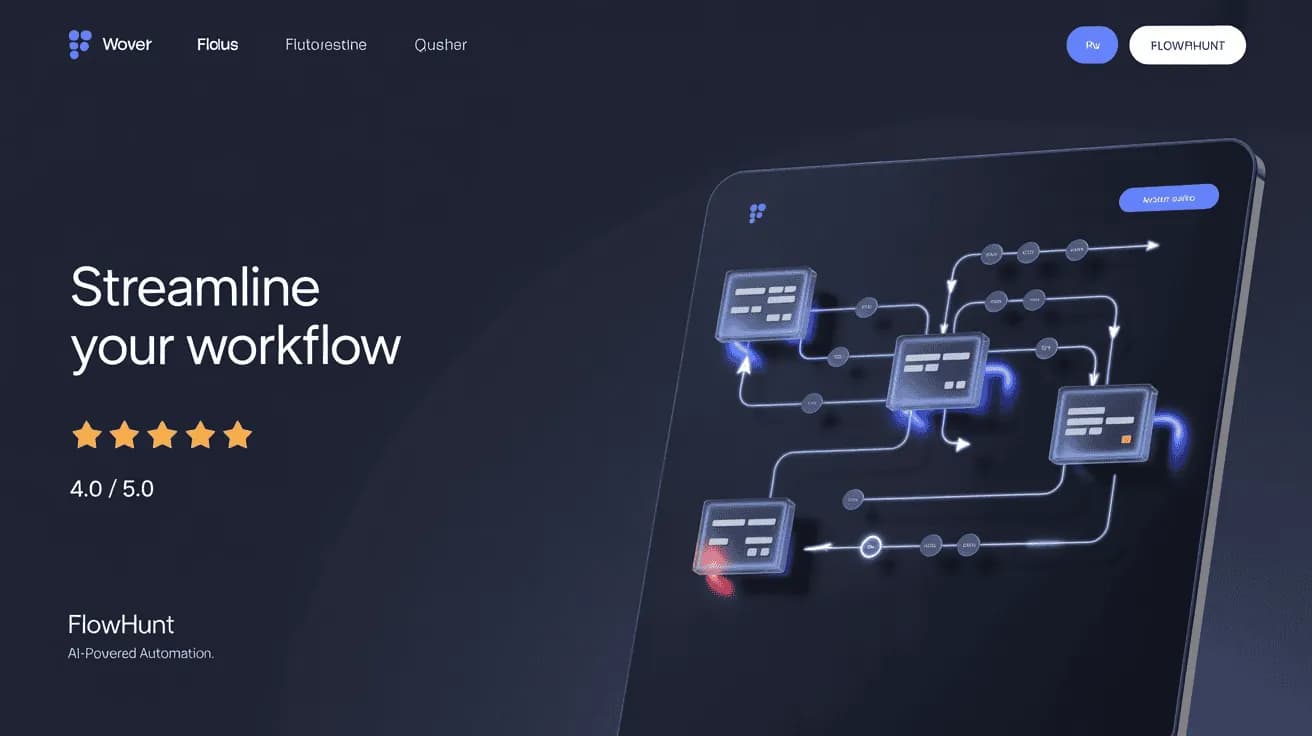
Honest FlowHunt review for 2026 — features, pricing in EUR, pros and cons, and who should actually use FlowHunt vs alternatives. Updated with confirmed pricing.
Quick Verdict: 4.0/5 for developers and technical builders who want to design custom AI workflows and deploy chatbots | 2.0/5 for non-technical marketing teams who need SEO, content strategy, and campaign tools that work out of the box without any setup.
What Is FlowHunt?
FlowHunt is a no-code AI workflow builder and chatbot platform built by AiMingle, s.r.o. — a Czech/Slovak company with offices in Prague, Bratislava, and a US incorporation in Wilmington, Delaware. The tagline "Build Your Team of AI Agents" captures the product's philosophy precisely: FlowHunt gives you the visual tools to construct multi-agent AI workflows using a drag-and-drop interface, without writing a single line of code.
Founded by Viktor Zeman and operating under AiMingle, s.r.o. (a company with roots dating back to 2004), FlowHunt has evolved into a broad AI platform spanning chatbot deployment, image and video generation, desktop batch processing, MCP server hosting, and professional AI consulting services. It is not a marketing platform. There is no built-in SEO module, no keyword research tool, no campaign planner — FlowHunt is a platform for building AI-powered tools, and the distinction matters enormously when evaluating fit for your use case.
The product targets developers, technical users, SMBs, and agencies who want to design their own AI automation pipelines. If you want to build a customer support chatbot, automate document processing, or connect AI agents to your internal data sources, FlowHunt offers genuine power. If you want an AI platform that already knows how to run a content strategy or optimize a landing page for search, you will find yourself looking elsewhere.
FlowHunt Features: A Deep Dive
Workflow Builder & AI Agents
The visual drag-and-drop workflow builder is FlowHunt's crown jewel. You can construct multi-step AI pipelines — called "flows" — by connecting components: LLM nodes, data retrievers, condition logic, API calls, and output formatters. Flows can run sequentially or spawn multiple parallel agents working on different subtasks simultaneously.
FlowHunt supports all major AI models (GPT-4o, Claude, Gemini, Mistral, and others), so you are never locked into a single provider. The multi-agent capability allows you to build sophisticated systems — for example, one agent that researches a topic, a second that writes a draft, and a third that formats it for a specific platform. There are 15+ ready-made flow templates covering use cases like Shopify product descriptions, Gmail automation, and Google Sheets integration.
The builder genuinely delivers on the "no-code" promise for users who understand workflow logic. The challenge is that understanding workflow logic still requires a technical mindset — even without code, you need to think in terms of inputs, outputs, and conditional routing.
AI Chatbot (No-Code Deploy)
FlowHunt includes a full no-code chatbot builder that lets you deploy AI chatbots on your website, WhatsApp, Slack, or other channels. You can connect the chatbot to custom knowledge sources (via RAG — Retrieval-Augmented Generation), configure personality and response style, and set up a LiveAgent integration for human handoff when the AI reaches its limits.
For businesses that want to automate customer support, lead qualification, or FAQ answering, this is a solid and production-ready solution. The human-handoff feature in particular is a differentiator — chatbots that can escalate to a human agent are significantly more deployable in customer-facing scenarios.
Photomatic (AI Image and Video Generation)
Photomatic is FlowHunt's AI creative studio, integrating 6+ image and video generation providers into a single interface. Users can generate images, edit them, and produce short video content without switching between platforms. This is particularly useful for agencies that need visual asset production as part of a larger workflow — for example, generating product images automatically from a catalog CSV.
MCP Servers Marketplace
One of FlowHunt's most technically forward-looking features is its MCP (Model Context Protocol) server marketplace. MCP is a protocol that allows AI models to call external tools and services in a standardized way — think of it as a plugin ecosystem for AI agents. FlowHunt's marketplace includes integrations like Serper (web search), Office Word, Vision, and custom connectors.
For developers building sophisticated AI systems, MCP server access gives FlowHunt a genuine technological edge over simpler automation tools. This is not a feature a typical marketing team will use, but it signals that FlowHunt is tracking where enterprise AI infrastructure is heading.
Free AI Tools Library
FlowHunt maintains a library of 100+ free AI generator tools — individual prompt-based utilities covering things like blog title generation, Google Ad copy, thank-you note writing, business name ideas, and more. These tools require no account for basic use and serve as a top-of-funnel acquisition channel.
The tools are single-use prompt templates, not integrated workflows. They are useful for quick one-off tasks but do not provide the depth of a purpose-built content module. Still, the breadth of the library is impressive for a free offering.
FlowHunt Desktop
FlowHunt Desktop is a native application for batch processing — running AI workflows against large datasets locally. This is a niche but valuable capability for technical users who need to process thousands of records without running into API rate limits or cloud processing costs.
Professional Services
Beyond the software platform, FlowHunt (via AiMingle, s.r.o.) offers a range of consulting and implementation services: custom AI development, AI training and audits, SEO services (as a consulting engagement, not a software tool), LLM knowledge services, UCP (Unified Communication Platform) implementation, and MCP server development and hosting.
This dual model — SaaS platform plus agency services — means FlowHunt can engage both buyers who want to self-serve and buyers who want a done-for-you implementation. It also means pricing conversations at the enterprise level often include professional services scoping, not just software licensing.
FlowHunt Pricing 2026: Full Breakdown
All FlowHunt plans are priced in Euros (EUR). At an approximate exchange rate of 1 EUR ≈ 1.07 USD (April 2026), prices convert as noted below.
Plan | Monthly | Annual (per month) | Credits | Interactions | Workspaces | Teammates |
|---|---|---|---|---|---|---|
Starter | €50/mo (~$54) | €46/mo (~$49) | 50 | 5,000 | 1 | 1/workspace |
Pro | €120/mo (~$128) | €110/mo (~$118) | 120 | 12,000 | 5 | 10/workspace |
Premium | €500/mo (~$535) | €458/mo (~$490) | 500 | 50,000 | 10 | 100/workspace |
Enterprise | from €1,500/mo | Custom | Unlimited | Unlimited | Unlimited | Unlimited |
Annual billing saves approximately 8% across all tiers (€48/year on Starter, €120/year on Pro, €504/year on Premium).
Understanding the Credit System
FlowHunt uses a dual-layer billing model: credits (the billing currency) and interactions (the usage proxy). Here is what that means in practice:
- 1 credit ≈ $1 USD in compute value
- A simple chatbot FAQ reply may consume as little as 0.01 credits
- A complex multi-agent workflow (research, write, publish) can consume 2–5 credits per run
- The Starter plan's 50 credits/month is genuinely constrained for any heavy AI workload — it covers simple chatbot conversations comfortably but limits complex automation significantly
The ceiling risk: A Pro plan at 12,000 interactions sounds substantial. But if your flows consume 2 credits per interaction on average, your real monthly capacity is closer to 6,000 tasks — half the headline number. Planning consumption requires estimating your use case's credit intensity, which is not always easy to do upfront.
What You Actually Get Per Tier
- Starter (€50/mo): Best for a single freelancer or solo founder running one deployed chatbot. One workspace, one teammate — strictly personal. As soon as you need a second team member or a second client project, you must upgrade.
- Pro (€120/mo): The main tier for small agencies and in-house teams. Five workspaces and 10 teammates per workspace covers most small-team scenarios. Shopify integration unlocks at Pro tier.
- Premium (€500/mo): Platform-level deployment for established agencies or mid-market companies running high-volume AI automation. The 4× price jump from Pro signals FlowHunt targets proven ROI buyers here, not experimenters.
- Enterprise (from €1,500/mo): Custom contracts, on-premise or cloud deployment, process audits, and custom-built flows included. White Label option (rebrand FlowHunt as your own AI platform with custom domain, logo, and emails) is available at this level.
White Label Option
Agencies wanting to resell a private-label AI platform can negotiate a White Label agreement with FlowHunt — no public pricing, requires direct contact. This is a meaningful differentiator for agencies building their own AI product on top of FlowHunt's infrastructure.
FlowHunt Pros and Cons
✅ Pros
- Genuinely no-code visual builder. The drag-and-drop workflow interface is well-designed and does not require programming knowledge — a real achievement for a multi-agent AI system of this complexity.
- Unmatched flexibility. Unlike tools locked into predefined use cases, FlowHunt lets you build virtually any AI automation: customer support, document processing, content generation, e-commerce automation, data enrichment, and more.
- Multi-language support (20+ languages). The platform is localized for 20+ languages, making it genuinely usable across European and international markets — not just an English-language tool wearing a translation hat.
- MCP server marketplace. Access to Model Context Protocol servers puts FlowHunt ahead of most competitors on AI infrastructure maturity. This is a meaningful differentiator for technically sophisticated buyers.
- White label option for agencies. The ability to rebrand and resell FlowHunt as a private-label platform is a unique revenue opportunity for agencies with AI product ambitions — very few competitors offer this at any price point.
- European company with 20+ years of history. AiMingle, s.r.o. has operated since 2004. For enterprise buyers with EU data residency requirements, a Central European company with offices in Prague and Bratislava may offer compliance and data handling advantages.
❌ Cons
- Not a marketing tool — requires you to build everything. FlowHunt ships infrastructure, not solutions. There is no built-in keyword research, SEO audit, content calendar, or campaign module. Marketing teams must assemble these capabilities from scratch using the workflow builder — a significant investment of time and technical skill before any marketing value is delivered.
- EUR pricing creates friction for US buyers. All plans are listed in Euros, which means US buyers face exchange-rate uncertainty on top of the standard SaaS purchase decision.
- Learning curve despite the "no-code" claim. "No-code" does not mean "no complexity." Building effective multi-agent workflows requires understanding flow logic, LLM prompt design, data routing, and error handling.
- Credit model is unpredictable for cost planning. The credits × interactions billing system requires estimating consumption patterns before committing to a plan.
- Limited B2B marketing-specific templates. While FlowHunt has 15+ flow templates, very few are oriented toward marketing workflows.
- Thin social proof in the US market. Brand search volume for "flowhunt" is only 90 searches/month in the US (April 2026). There are no publicly verifiable review counts on G2, Capterra, or Trustpilot.
Who Is FlowHunt Best For?
Audience | Fit | Notes |
|---|---|---|
Developers & technical builders | ✅ Excellent | Core audience. Full flexibility, MCP access, API/webhook support. |
Agencies building custom AI products | ✅ Excellent | White label, multi-workspace, and professional services make this a strong fit. |
SMBs deploying customer support chatbots | ✅ Good | No-code chatbot + human handoff + knowledge sources cover most support automation needs. |
Marketing teams (non-technical) | ❌ Poor fit | No built-in marketing tools. Everything must be built. Steep learning curve. |
Solopreneurs doing digital marketing | ⚠️ Marginal | Free AI tools library is useful; the paid platform requires more technical investment than most solopreneurs have capacity for. |
Enterprise with EU data requirements | ✅ Good | Central European HQ, Prague/Bratislava offices, custom deployment options address EU data considerations. |
E-commerce brands | ⚠️ Moderate | Shopify integration (Pro+) and Photomatic for product images are useful, but e-commerce marketing automation requires significant workflow building. |
FlowHunt Alternatives Worth Considering
Allable.ai — The strongest alternative for marketing teams. Where FlowHunt gives you workflow components to assemble, Allable ships a complete AI marketing platform: SEO module, keyword research, competitor analysis, content strategy, campaign planning, AI images, and social tools — all accessible via a conversational chat interface with no setup required. For non-technical marketers, this is a more direct path to marketing ROI. Read our full Allable vs FlowHunt comparison →
n8n — Open-source workflow automation with a large self-hosting community. More developer-oriented than FlowHunt, but free to self-host. If your use case is general process automation (not AI-specific), n8n may deliver more value at lower cost.
Zapier — The established leader in no-code workflow automation. Less AI-native than FlowHunt but vastly more integration coverage (6,000+ apps). Better choice if you need broad software connectivity rather than deep AI agent capabilities.
Make.com — A strong Zapier alternative with more flexible conditional logic. Like Zapier, it's integration-first rather than AI-agent-first, but the visual flow builder is arguably more intuitive for non-technical users.
Botpress — A direct competitor in the AI chatbot builder space. Offers a generous free tier (unlike FlowHunt's 5-credit trial), making it easier to evaluate before committing.
Tidio — If your primary need is a website chatbot with live chat capabilities, Tidio is cheaper (free tier, paid from $29/mo) and more focused than FlowHunt.
Is FlowHunt Worth the Investment?
The answer depends entirely on what you are trying to accomplish.
FlowHunt delivers clear ROI when: You need a custom AI automation pipeline that no off-the-shelf tool covers. Building a specialized document processing workflow, a multi-step lead qualification agent, or a custom AI product for clients — these are the scenarios where FlowHunt's flexibility justifies the investment in setup time and subscription cost.
FlowHunt struggles to deliver ROI when: You are a marketing team that needs keyword research, content strategy, and SEO analysis today. The time required to build these capabilities in FlowHunt's visual builder — before a single marketing task is completed — represents a significant hidden cost. At €120/month (Pro), you could alternatively access a purpose-built marketing platform and start generating output within minutes.
For agencies considering white label: FlowHunt's white-label offering has genuine revenue potential. If your agency wants to offer a private-label AI platform to clients, the infrastructure cost (Enterprise, from €1,500/mo) is reasonable against the potential revenue from reselling access at a markup.
Our Verdict
FlowHunt is a genuinely impressive AI platform for the right buyer. The visual workflow builder is well-executed, the multi-agent capabilities are real, and the MCP marketplace signals a product team paying attention to where enterprise AI infrastructure is heading. AiMingle, s.r.o.'s 20+ years of operating history provides credibility that many newer AI startups lack, and the white-label option opens a revenue opportunity that few competitors even attempt.
The critical caveat — one that applies to every evaluation of FlowHunt — is that it is a builder platform, not a solution. Every workflow you want must be designed, built, and tested before it delivers value. For developers and technical teams, that creative flexibility is the product. For marketing teams expecting an AI assistant that already understands SEO, content strategy, and campaign management, that blank canvas is a liability.
If you are a developer, technical founder, or agency building custom AI products and chatbots, FlowHunt deserves serious evaluation. If you are a marketing manager looking for an AI platform that generates keyword research, content briefs, and competitor insights without a multi-week setup project, explore purpose-built alternatives — particularly Allable.ai, which ships everything FlowHunt requires you to build.
Bottom line: FlowHunt is excellent software solving a genuinely hard problem — just not the problem most marketing teams have.
Also considering other AI platforms? Read our Sintra AI Review 2026 or explore the full Allable vs FlowHunt comparison.
FAQ
Is FlowHunt free?
FlowHunt does not offer a free tier. New users receive 5 free trial credits at signup — enough for basic exploration but not meaningful production testing. Paid plans start at €50/month (Starter). For comparison, competitors like Tidio and Botpress offer functional free tiers.
What is FlowHunt used for?
FlowHunt is used to build custom AI workflows and chatbots — customer support automation, document processing, multi-agent research pipelines, AI product assistants, and more. It is a platform for constructing AI-powered tools, not a pre-built marketing or productivity suite.
Is FlowHunt a chatbot builder?
Yes — FlowHunt includes a full no-code chatbot builder with website, WhatsApp, and Slack deployment options, custom knowledge sources (RAG), and human-handoff via LiveAgent integration. The chatbot builder is one of its strongest individual features.
How does FlowHunt pricing work?
FlowHunt uses a dual-layer billing system: credits and interactions. Plans are priced in Euros: Starter at €50/mo (50 credits, 5,000 interactions), Pro at €120/mo (120 credits, 12,000 interactions), Premium at €500/mo (500 credits, 50,000 interactions), and Enterprise from €1,500/mo with unlimited credits and interactions. One credit equals approximately $1 in compute value, and consumption per interaction varies based on workflow complexity.
Is FlowHunt good for marketing teams?
Not without significant setup investment. FlowHunt has no built-in SEO tools, keyword research, campaign planning, or content strategy modules. Marketing teams must build these capabilities using the workflow builder — which requires technical understanding and substantial time before marketing value is delivered. Purpose-built marketing platforms like Allable.ai are a better starting point for most marketing teams — see the full Allable vs FlowHunt comparison.
How does FlowHunt compare to n8n or Zapier?
FlowHunt is more AI-agent-native than n8n or Zapier — it is built around multi-agent AI workflows and chatbot deployment, whereas n8n and Zapier focus on general software integration. n8n offers a free self-hosted option; Zapier has far broader app coverage (6,000+ integrations). For pure AI workflow building, FlowHunt is the stronger tool; for broad integration connectivity, Zapier and Make.com win on coverage.
What are FlowHunt credits?
Credits are FlowHunt's billing unit — approximately equivalent to $1 each. Each AI interaction within a flow consumes a fraction of a credit (simple tasks) to multiple credits (complex multi-agent flows). The Starter plan includes 50 credits/month; Pro includes 120. The credit consumption rate depends entirely on the complexity of your workflows.
Where is FlowHunt based?
FlowHunt is built by AiMingle, s.r.o., a Czech/Slovak limited liability company. The company operates offices in Prague (Czech Republic), Bratislava (Slovakia), and has a US incorporation in Wilmington, Delaware. The Central European base has implications for EU data handling, support time zones, and pricing currency (EUR).